
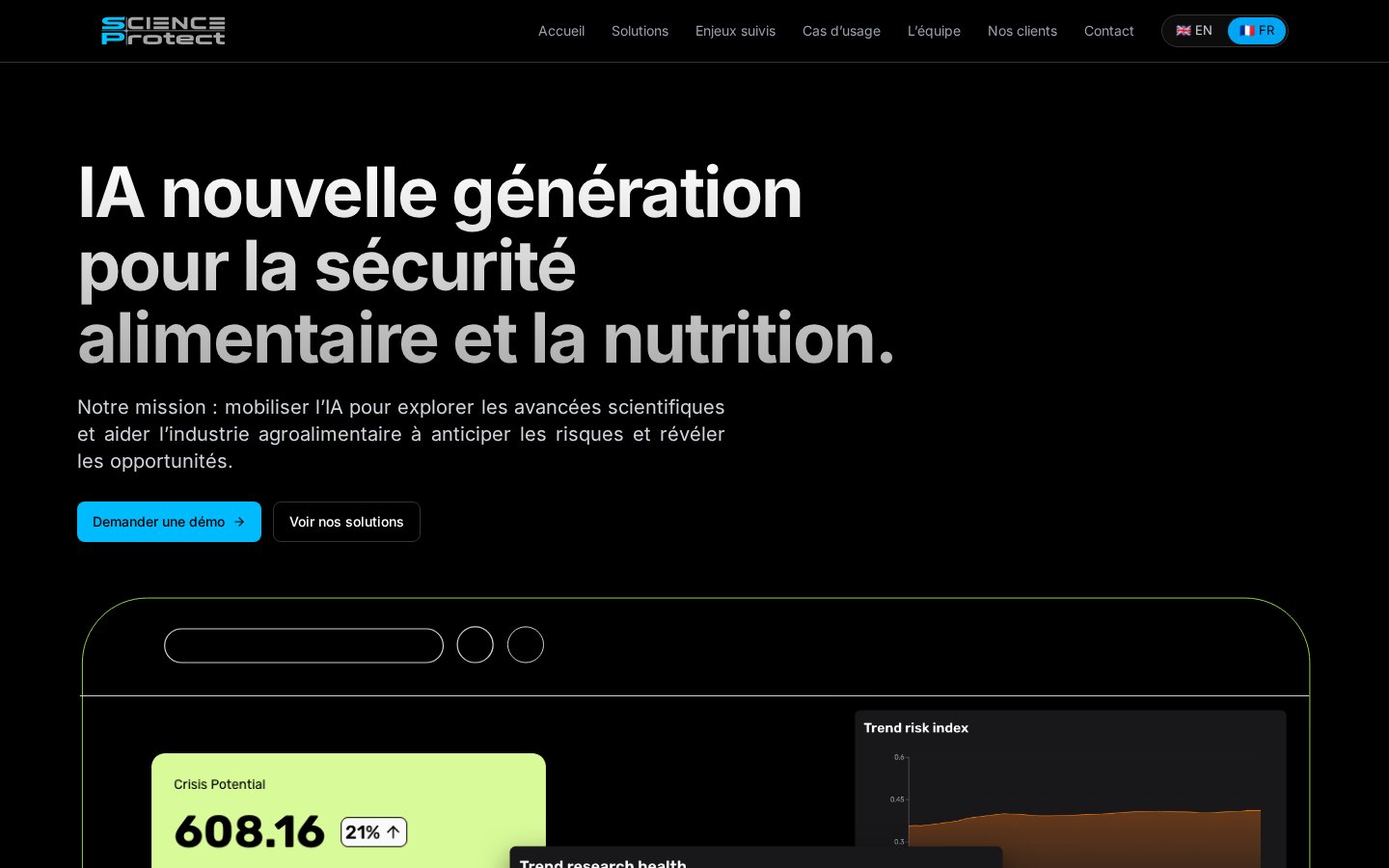
ScienceProtect helps the food industry keep track of what research publishes about substances, foods and their health effects. The client sums it up on its website: turning 40 million peer-reviewed scientific studies into actionable signals for food safety and nutrition. I have worked on this product since 2024, within the technical team of CheckTheNet, the company that publishes it. It is team work, and this case study states exactly what I built.
In pictures
The project in detail
In 2024 I wrote most of the API of the first platform, with Django REST Framework on PostgreSQL: substances, foods, publications, user accounts and monitoring. It feeds a Next.js application whose interface was built by another developer on the team, with whom I worked on the integration.
In 2025 I designed and built PubMed API, a fully asynchronous FastAPI service sitting in front of the public PubMed API. It batches requests, caches results in Redis and keeps its throughput under the public service's quota, so the rest of the platform can query the scientific literature without being throttled. The service exposes 25 routes and I authored about two thirds of its commits.
I then contribute to the core product, Who's Who, a GraphRAG built as a team: a Memgraph knowledge graph links substances, diseases, foods, publications, experts and panels of EFSA, the European Food Safety Authority. TaskIQ pipelines fetch the publications of each substance and link them to diseases, then LLM agents written with pydantic-ai classify the study domain, the methodology and the observed effect. Agent instructions are versioned: when one changes, only the affected publications are reprocessed. I wrote about a third of this repository's commits, including the scrapers that collect EFSA experts and opinions.
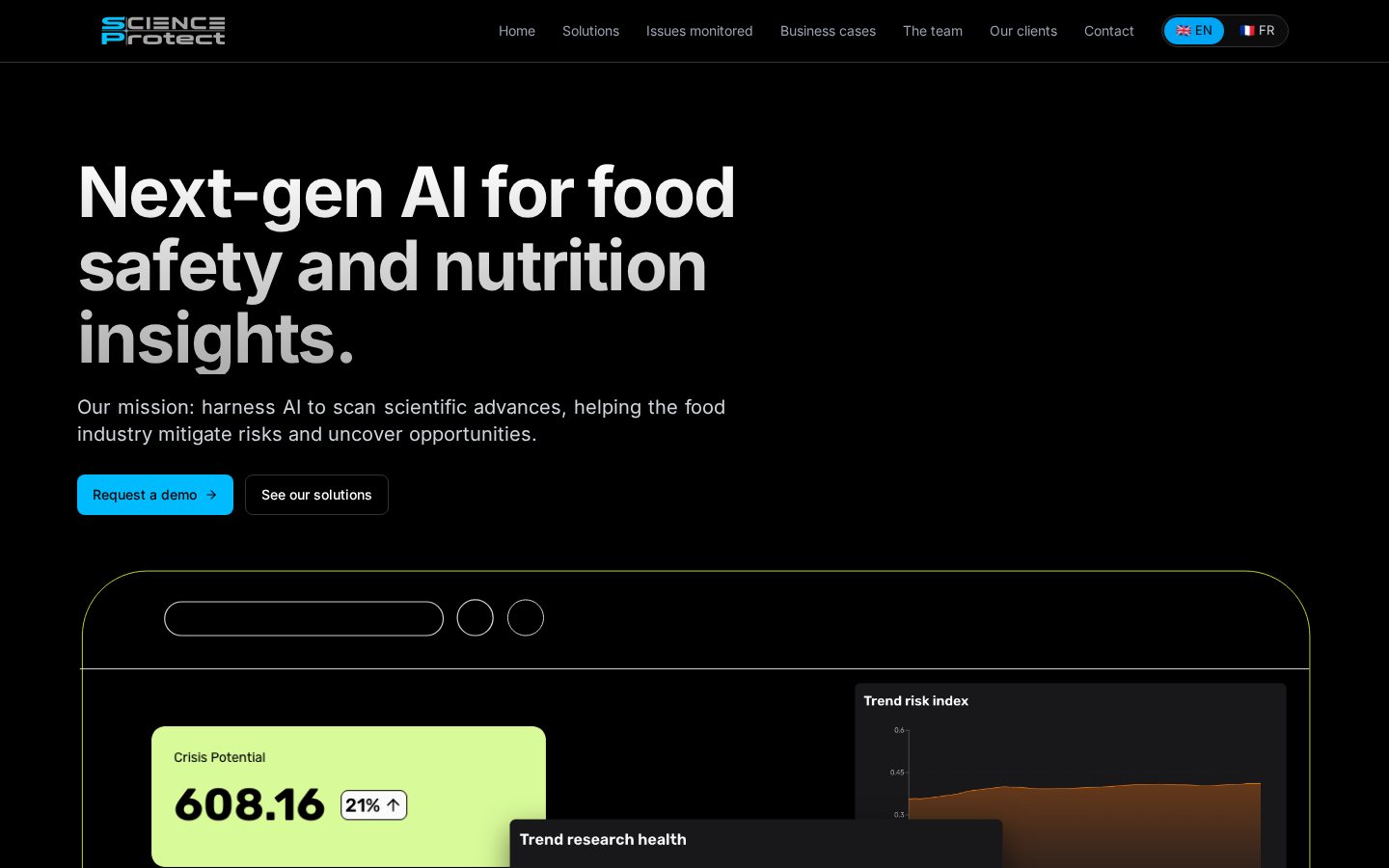
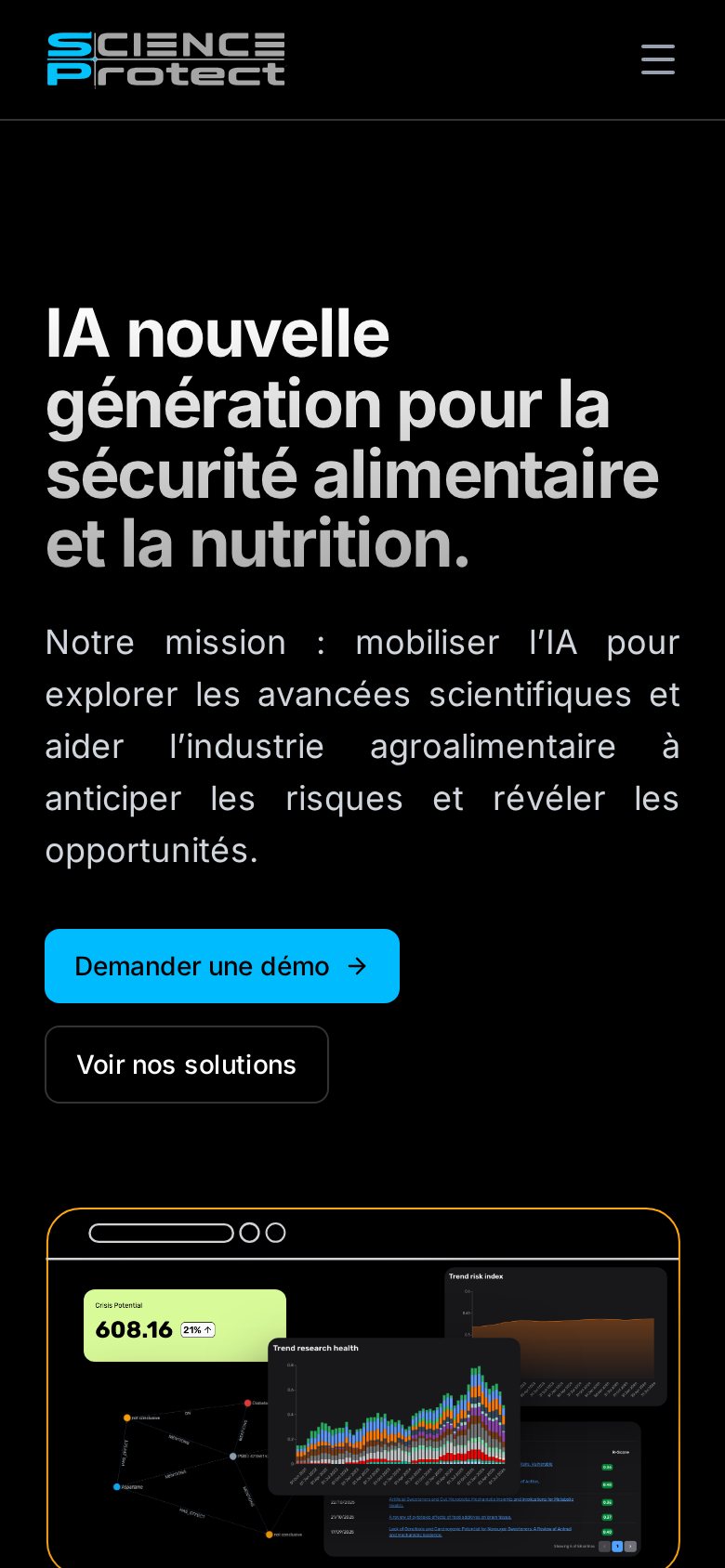
Together with the team, I also built the client's bilingual marketing site with TanStack Start (server-rendered pages, one URL per language, structured data) and the small FastAPI service that relays its contact form through Brevo.
Two open source libraries came out of this project: fastapi-object-pagination, to paginate typed FastAPI responses, and async-factory-boy, to generate asynchronous test data. I also contributed upstream to neontology, the Python library bridging Pydantic and graph databases.