Why redesign a website that still works?
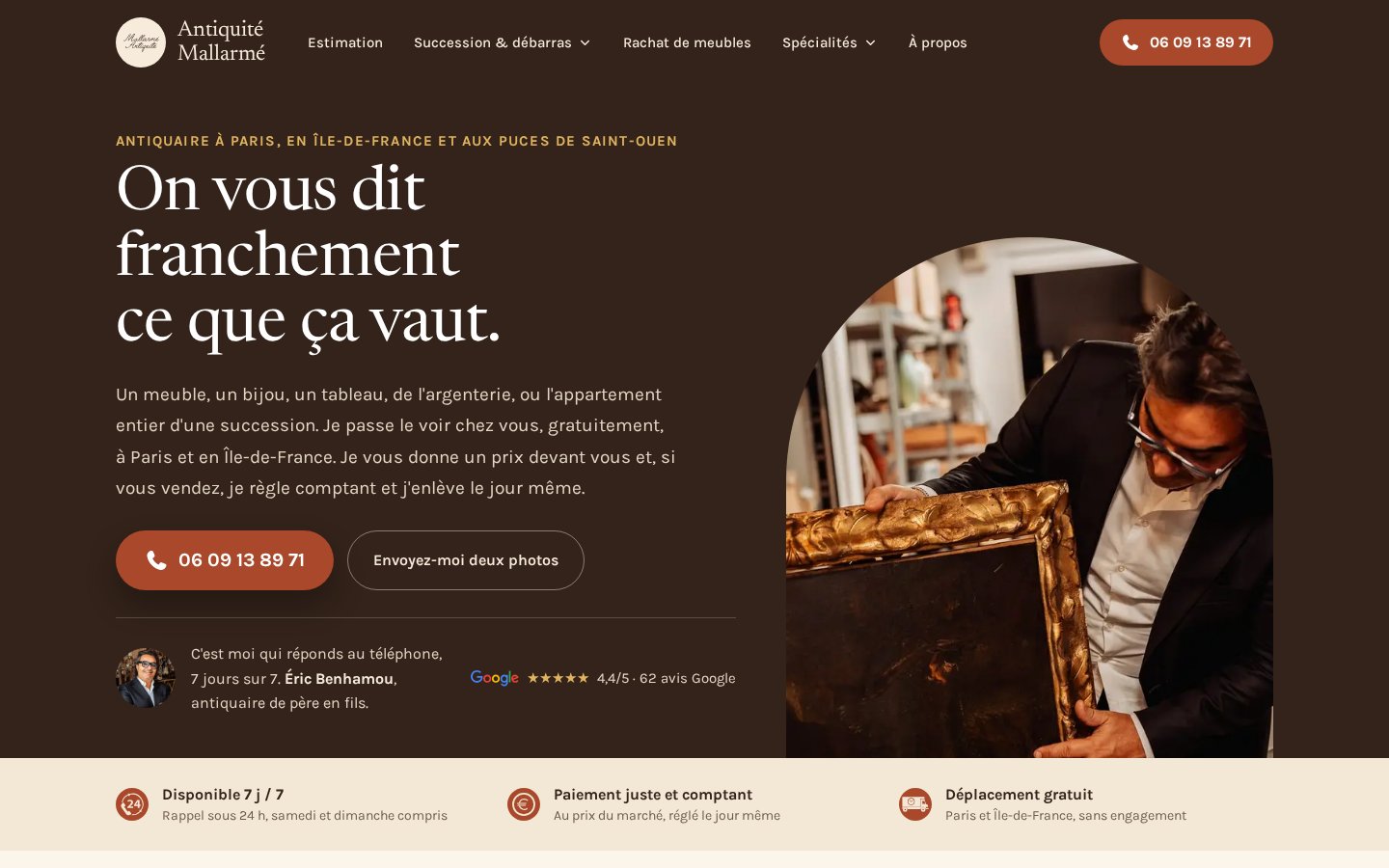
A website can look fine and still be invisible. That was the case with the second version of Antiquité Mallarmé: the content was good, but the site was rendered in the browser. Every page shared the same title and description, and structured data was injected afterwards, so it was missing from the HTML most crawlers read. The redesign prerendered each page at build time, with its own title, description, canonical URL and structured data.
A redesign also makes sense when a site costs more than it brings: WordPress plugins to update every week, slow pages on phones, a contact form that lands in spam. If your site is fast, well ranked and easy to edit, I will tell you so, and I will not offer to rebuild it.
How I migrate a WordPress site without losing rankings
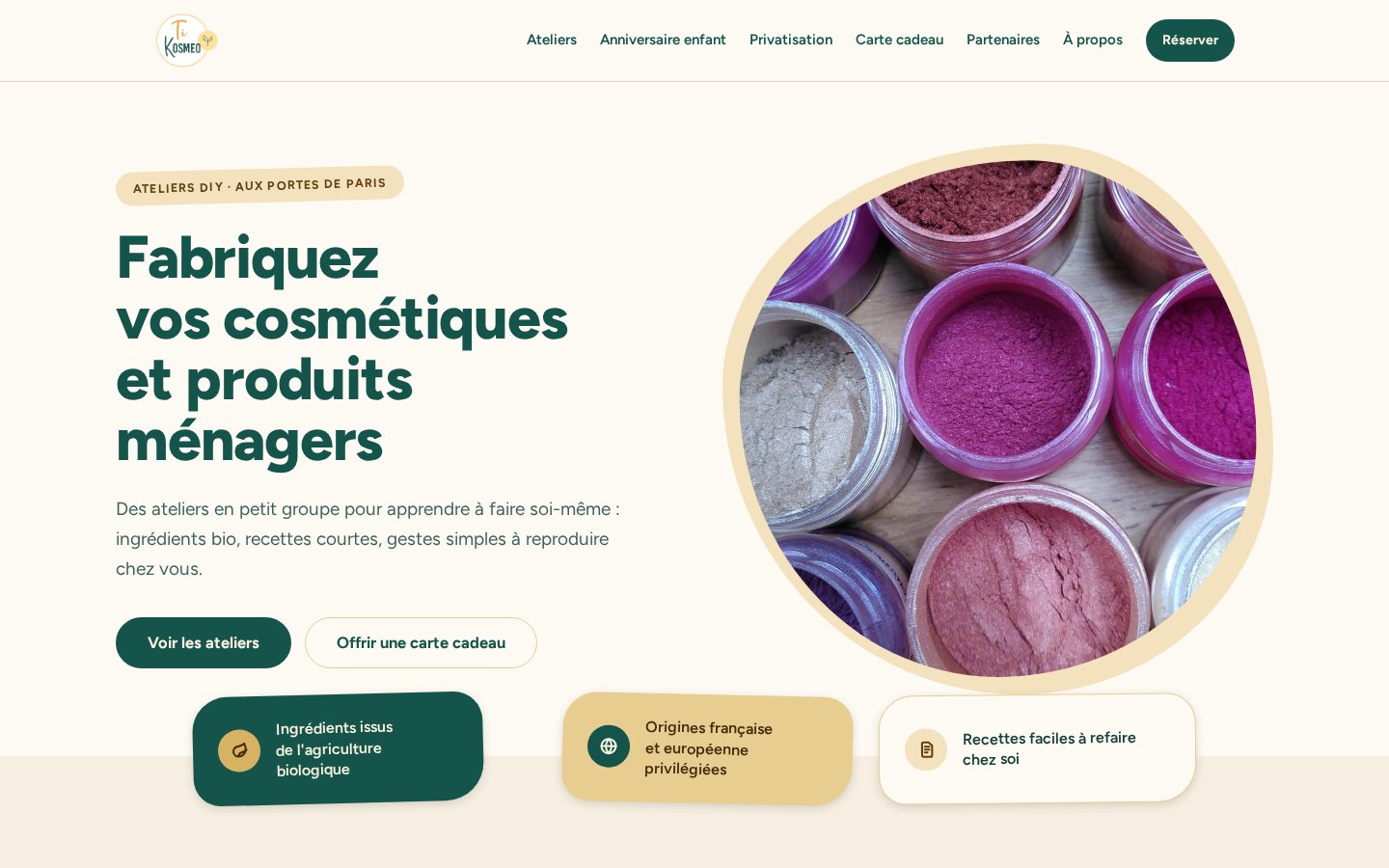
I start with data, never with intuition: the old sitemap, the pages that actually get clicks in Search Console, the backlinks measured in Ahrefs. For Ti Kosmeo, that inventory gave 19 mapped WordPress pages and 55 permanent redirects, written one by one in the server configuration. Useful images were brought over, and booking affiliate links were kept byte for byte so commission tracking did not move.
Every new page gets its final address from day one, including in English when the site is bilingual: renaming an indexed page costs a redirect to maintain forever. I then check online, URL by URL, that old addresses answer with a permanent redirect and new ones answer directly.
Fast pages, measured on a real phone
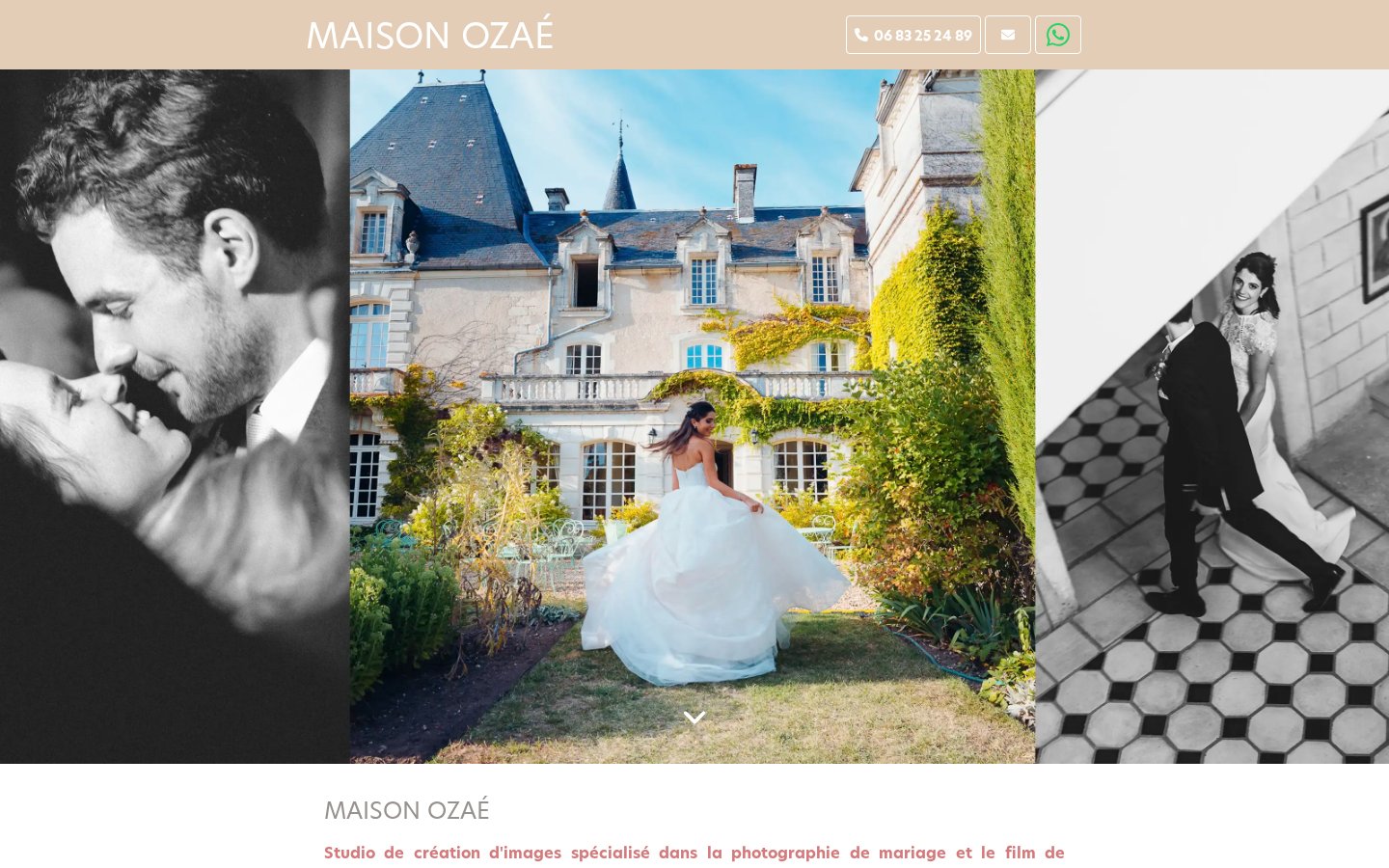
The score that matters is the mobile one, not the desktop one. On Antiquité Mallarmé, the home page went from 52 to 75 on mobile PageSpeed, and accessibility from 96 to 100, without touching the design. On Ti Kosmeo, the home page went from 62 to 90. On Maison Ozaé, a photo heavy wedding portfolio, the home page went from 67 to over 80 without lowering image quality.
The levers are always the same and I apply them every time: one copy of each image per screen width, generated at build time, self hosted and preloaded fonts, measurement scripts loaded after the first interaction, and properly tuned server compression. I measure three times, on the version actually served, before quoting a figure.
Technical SEO and GEO: be found, then be quoted
Every site I deliver has a unique title and description per page, a canonical URL, an automatically generated sitemap, a robots.txt decided with you, and structured data suited to each page type: organisation, service, frequently asked questions, breadcrumb. Maison Ozaé has 59 prerendered pages, each with its own tags, in French and English.
Answer engines such as ChatGPT, Perplexity or Claude do not read websites the way Google does. They reuse self contained paragraphs, clear definitions and dated facts. I structure content that way, add an llms.txt file and help you decide which AI crawlers to allow.
How many pages, and how does the project run?
I build sites where each page answers a single question a visitor types into a search engine. Antiquité Mallarmé is not just a home page: the site has one page per family of appraised objects (paintings, silverware, antique jewellery, watches, fireplaces, Chinese vases) and one page per type of house clearance, for 23 addresses in its sitemap. Ti Kosmeo has one page per workshop, with its reviews and related workshops. Each page gets enough text to be indexed and quoted, and links to two or three neighbouring pages, with anchors that describe the target page.
The project always follows the same steps. We start from a mockup, yours or one we build together. I then fix the list of pages and their final addresses, in French and English if the site is bilingual, and write or rework the content with you. The site first lives on a staging address, closed to search engines by a dedicated header, where you review everything. After launch, I check redirects, tags and speed on the public version, and submit the sitemap to Search Console.
What you get, and what I do not do
You get a static site served by nginx behind a proxy that handles HTTPS, with no database to hack and no plugin to update, a contact form relayed by a small API that sends messages through Brevo with bot protection, and legal pages that actually name the host and providers. The code belongs to you and lives in a Git repository.
I am not a graphic design agency: I work from an existing mockup, your brand guidelines, or a mockup we build together. If you want to edit your own copy every day without going through me, a well maintained WordPress site is sometimes still the best choice, and I will say so.