

Antiquité Mallarmé is the business of Éric BENHAMOU, an antiques dealer at the Paul Bert market in Saint-Ouen, specialised in valuations, home buy-outs and estate clearances. His need is concrete: people looking to have a painting, silverware or a house's contents valued must find him, and be able to send him photos in a few seconds. I have worked with him since 2020, and the website is now in its third generation.
In pictures


The project in detail
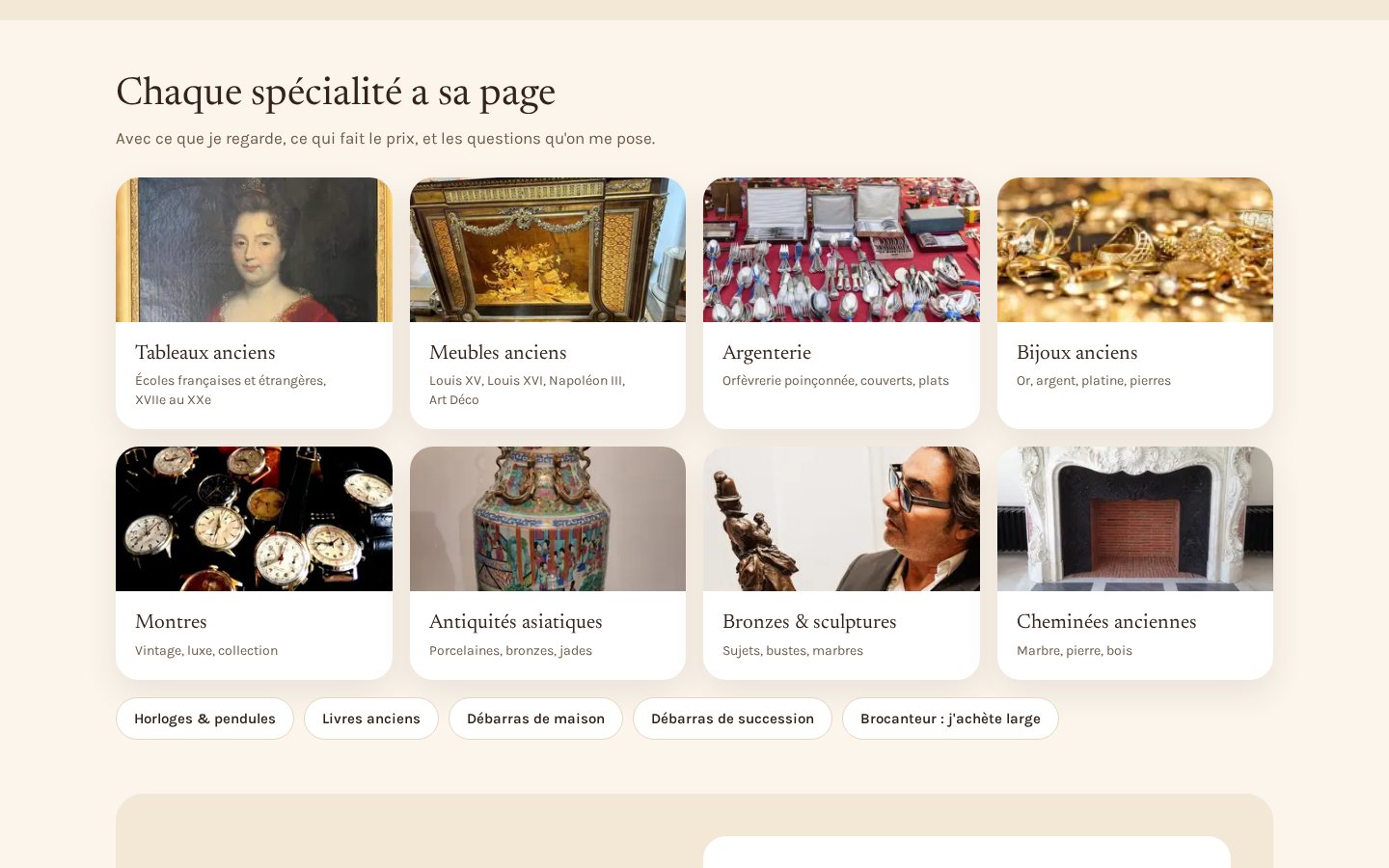
The first version, in 2020, was a client-rendered Angular application. In 2024 I rewrote it in Next.js with Tailwind CSS and daisyUI, and added dedicated pages for each family of objects: silverware, jewellery, watches, Asian art, fireplaces. In 2026 I migrated the site to TanStack Start with static prerendering. The diagnosis was simple: every page served the same title and description, and structured data only existed in the browser, invisible to most crawlers. Today each URL has its own title, description, canonical address and JSON-LD in the served HTML, and the sitemap is generated at build time. This is exactly the work I offer in a website redesign: keep the content that works, and fix what prevents it from being found.
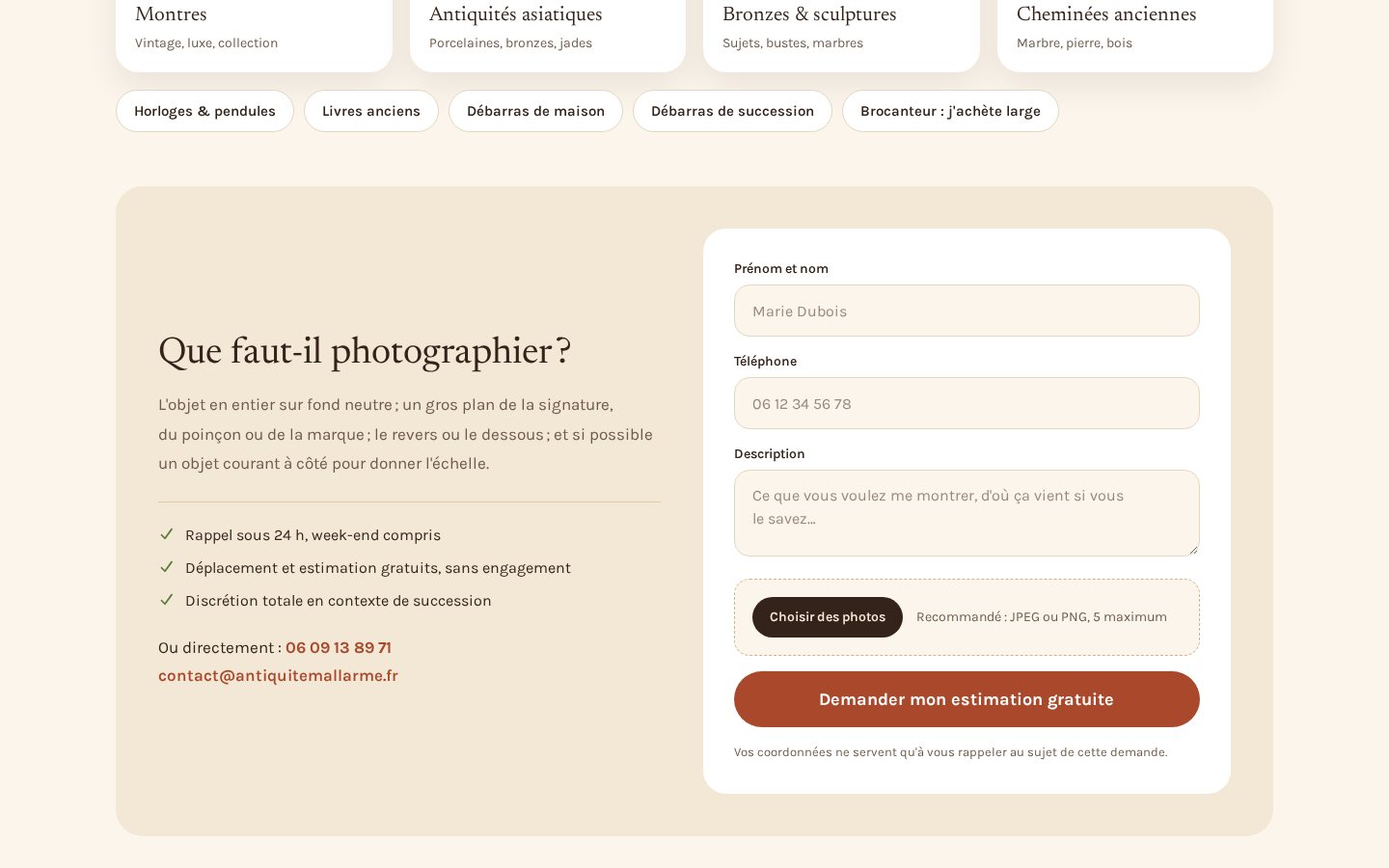
The site has 23 public pages: valuation, furniture buy-out, eleven speciality pages and six pages about clearances. The valuation form accepts up to five photos, re-encoded as JPEG in the browser, then relayed by a small FastAPI service to Brevo. That API rate-limits submissions per IP address to protect the email quota, filters bots with a honeypot field and keeps the Google Ads click identifier with the request, without ever rejecting a lead over malformed tracking data.
I also ran a mobile performance project without touching the design: images resized to WebP at build time, Google Tag Manager loaded on first interaction, two preloaded fonts, level 6 nginx compression. The mobile PageSpeed score of the home page went from 52 to 75, accessibility from 96 to 100, and the desktop score reaches 99.
The website is only half of the work: I also run acquisition, with a marketing strategy built from actual demand. Ahrefs gave me the search volumes and cost per click of the sector, Search Console what organic search already captured, mostly the brand and a few nearby towns. Clearance and estate searches, among the most expensive in the sector, had neither a page nor an ad. So I wrote one page per intent (estate, house, Paris flat, cellar and attic, price, free clearance) before giving them their own ad groups.
The Google Ads campaigns are tuned search term by search term: negative keywords give each ad group back the searches that belong to it and stop clicks on competitors' brands, and every new group has its own keywords, responsive ads and dedicated landing page. An ad only repeats promises the site makes and Éric has approved. Conversion tracking counts calls, WhatsApp messages and emails, including clicks made before Google Tag Manager loads, and audience is measured without cookies by Ahrefs Web Analytics.
Cookie consent is handled by a home-made banner in basic mode: no advertising script loads before the visitor agrees, and the cookies page describes what the site actually stores. The Google and PagesJaunes reviews on display are quoted word for word, with their dates. Finally, the front end and the API have automated tests, including one that fails on the first unwanted typographic dash, and continuous integration that checks lint, tests and typing before every merge.